Dakar 2026 closes: 153 medal events, three sites and a first Olympic-movement Games on African soil
The Youth Olympic Games ended in Senegal on 13 November. The numbers, the medal table, and what the IOC and organisers say Africa has now shown it can host.
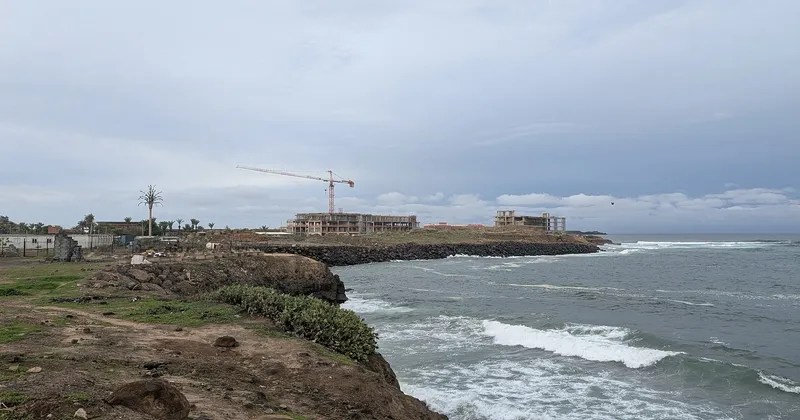
The Dakar 2026 Youth Olympic Games ended in Senegal on Friday 13 November after two weeks of competition. Organisers describe them as the first Olympic event ever held on African soil, and the IOC president says they exceeded expectations. The facts behind that claim are worth setting out, because they show what was built, who won, and what stays open.
The scale
According to AFP, about 2,700 young competitors from around the world took part in 25 sports across 153 medal events. Senegal fielded 136 athletes. Competition was spread over three locations: Dakar itself; Diamniadio, a suburb that housed the Youth Olympic Village and where the closing ceremony was held; and the beach town of Saly, about 80 kilometres from the capital.
The final day belonged to beach handball, breaking and fencing. Spectators, AFP says, were loud and enthusiastic, especially for African athletes, with an energy that Senegal, a country of about 19 million people, usually saves for football.
The medal table
Al Jazeera’s Nicolas Haque reports that China finished first with 18 gold medals, Japan second with 11 and Russia third with eight. AFP’s list of gold counts continues: Egypt six, Ethiopia five and Senegal five. Senegal ended sixth, ahead of France, according to Al Jazeera.
Two details add context. The quota system limited each country to one athlete per event, which caps what a large team can win. And Senegal’s own athletes prepared in an unusual place: Al Jazeera says 80 of them trained in China before the Games, rather than in France or the United States.
Who paid, and how
Al Jazeera reports that France’s development agency lent Senegal 80 million euros, about $88 million, for sporting facilities. The same piece says events sold out, while transport was costly. It gives no attendance figure, and AFP does not either, so the size of the crowds remains an impression rather than a number.
That gap matters when reading the “success” language. The two sources agree on the mood and the sell-outs; neither provides a cost per athlete or a final bill for the host, and the 80 million euros is a loan, not a grant.
What the officials said
IOC President Kirsty Coventry told her closing address on Thursday that expectations were “far exceeded” and that the world had seen what Africa is capable of, AFP reports. Al Jazeera quotes her at a final news conference, visibly emotional: “I am so proud. I’m so grateful.” Coventry, a former Zimbabwean swimmer, is the first African and the first woman to lead the IOC.
Ibrahima Wade, general coordinator of the Dakar 2026 organising committee, described the Games to AFP as a test that had to succeed, to show Africa’s place in hosting future major events.
Beyond the medals: Russia and the refugee team
Russian athletes competed under their own flag and colours, which both outlets describe as a first in the Olympic movement since the 2022 invasion of Ukraine. Al Jazeera adds that Russia’s flag and anthem returned to an Olympic event for the first time since the suspension, and that 17-year-old Serafima Fokina sang the anthem on a podium. Russia’s eight golds put it third in the table.
A refugee team, made up mainly of athletes based in Africa, also competed, AFP reports.
What it does and does not prove
A Youth Games has a fraction of the logistics of a Summer Olympics. AFP’s own framing is careful: it notes that South Africa, which hosted the 2010 men’s football World Cup, is officially bidding for the 2036 Summer Olympics, and so may become the first African nation to host the full Games. Senegal’s event is a smaller test, but a real one: three sites, 25 sports and a host country with 19 million people.
What remains open is straightforward. Neither source reports the cost of the Games to Senegalese taxpayers beyond the French loan, and neither describes what happens to the venues afterwards. The facts available today show that the Games ran, sold out their events and ended with a strong statement from the IOC president. They do not yet show who carries the cost.
Sources
More in Olympic & Athletics
-
LA28 athletics qualification: faster standards, 60% of places via rankings, and the marathon clock is running
World Athletics published its LA28 qualification system on 10 November: faster entry standards than Paris, a 40/60 split with world rankings, and windows that open as early as this month.
-
The 2027 Diamond League runs Doha to Zurich in 15 stops, and ends 15 days before the Beijing worlds
World Athletics set the 2027 Diamond League calendar: Doha on 7 May, Eugene moved to July, three meetings in 11 days in August, and a two-day Zurich final.
-
Brisbane 2032 waits until April 2027 for its final sports list, and December is the date to watch
The IOC moved the Brisbane 2032 programme decision to its April 2027 Session. A December sorting step will show which sports are safe and which face assessment.