Madrid says its first Grand Prix generated €544 million, and the number comes with caveats
A PwC study commissioned by the Madring promoter puts the Spanish GP at €544m and 10,948 jobs. Here is what the figure measures, what Barcelona claimed, and what it leaves out.
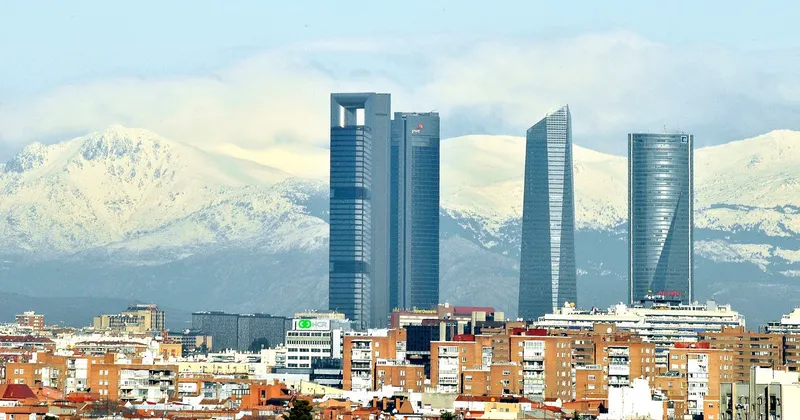
Madrid’s first Spanish Grand Prix at the new Madring circuit was worth €544 million to the regional economy, according to the circuit’s promoter. The figure, released on 13 November from a study by the consultancy PwC, is 16.5% above the €467 million the same kind of study projected before the race.
A promoter’s own study is a starting point, not a verdict. Here is what it says, what it is compared with, and the questions it does not answer.
The headline numbers
Madring’s press release lists the main results from the PwC work:
- €544 million in economic impact;
- 10,948 jobs created or maintained;
- €95 million in tax revenue;
- 352,618 attendees over four days, 35% from abroad and 20% from other parts of Spain;
- international fans spent an average of €2,772 each during their stay, or €591 a day, which Madring says is almost double the average international tourist’s daily spend in Madrid.
The impact is spread across sectors. Hospitality gets €114 million, manufacturing €86 million and construction €51 million, according to the release.
The Race’s Samarth Kanal adds the multiplier: each euro directly tied to the event produced €4.60 across Madrid’s wider economy. He also relays the scale, citing IFEMA chairman Jose Vicente de los Mozos: the €544 million equals 0.16% of the Madrid region’s GDP and 0.30% of the city’s.
Beating the forecast
The earlier estimate is documented. Forbes contributor Sam Leveridge wrote in September that a PwC study had pointed to €467 million and 8,850 jobs, with tax and social security contributions near €83 million. The final figures are higher on all three: 16.5% on impact, 23.7% on jobs and 14.5% on tax, according to The Race. The arithmetic checks out: 467 × 1.165 is about 544, and 8,850 × 1.237 is about 10,950.
Attendance was also above the plan. Forbes said about 353,000 people passed through the gates over the Friday-to-Sunday weekend, and that more than 120,000 tickets were sold ahead of the race.
The Barcelona comparison
Barcelona was the Spanish Grand Prix’s home before Madrid, so the obvious question is whether the move paid off. The Race puts the two side by side. Barcelona’s circuit reported more than €300 million in local activity for 2024 in its own reports, and its CEO Pol Gilbert has said F1 generates “an economic impact of more than €300 million per edition”.
On paper, Madrid wins. The Race is careful to explain why that is not a clean comparison: the Madrid figure is from a study the promoter commissioned, the Barcelona one comes from the circuit’s own reporting, and they refer to different years, 2026 and 2024. Different methods can move an impact figure by a wide margin without any change in the underlying event.
What the study does not tell you
Three gaps stand out.
Cost. Forbes reported that the circuit’s construction cost close to €83 million, and noted that it did not detail how much of that was public money. An impact figure measures spending that the event attracts. It does not net out what the host paid to attract it.
Substitution. The Race notes that 45% of attendees came from Madrid and nearby. Money a local resident spends at the track is money not spent elsewhere in the city. The study’s accommodation split, 49% in hotels and 32% in short-term rentals according to The Race, describes visitors, not this offset.
Side effects. The Race points out that short-term rentals are contentious in Spain, which removed nearly 66,000 listings in 2025 and fined Airbnb €64 million. Hotel prices during the race weekend averaged €485, about 70% above normal, citing the local outlet Democrata. Local residents also protested about noise and environmental effects.
The race itself
Forbes added a sporting caveat: the race was widely called unexciting, with four overtakes, the season’s lowest, and the circuit’s designer and F1 left open the chance of layout changes before the next edition. The Race confirms the layout will change for 2027.
Madring’s survey results are strong: 95.3% of attendees said the race improved Madrid’s image and 98.1% would recommend the city. The Race cites the survey as 1,102 face-to-face interviews over the race weekend and gives 86% as the share of international visitors likely to return. Madring’s own release says nine in ten plan to come back. The two phrasings do not match exactly, and neither source explains the difference.
So the €544 million is best read as the promoter’s headline, prepared by PwC for the circuit; I found no independent check of it. What it can reliably say is that the event drew a large, well-travelled crowd. What it cannot say is whether Madrid, after the bills, is better off.
Sources
More in Motorsport
-
Alonso will race the 2027 Dakar for Aston Martin, a month before F1 testing starts
Fernando Alonso confirmed a Dakar Rally return in an Aston Martin Dreadnought run by Prodrive. The timeline, the crew and the questions that remain, from the reports.
-
F1's V8 proposal, explained: a 2.1-litre turbo, half the electric power, and a fight over 2030 or 2031
The FIA's plan for the next F1 engine is a smaller turbo V8 with 100kW of constant electric help. What is in it, who objects, and why the start year is still open.
-
Las Vegas Grand Prix: five drivers within 33 points are racing for second in the standings
With Antonelli already champion and Mercedes the constructors' winner, the Strip weekend decides who finishes behind him. A look at the numbers and the cold-weather puzzle.